


























CMS development services: How to manage content efficiently




CMS Development Services: How to Manage Your Content Efficiently By Adnan Ghaffar Published 03/ 23/ 2026
It is easy to manage content until the time when your business begins to grow. Initially, it is only a few web pages, perhaps a blog, and some updates here and there. However, the more space you occupy online, the more content you cannot easily control. You begin to work with numerous pages, various teams, recurrent changes, and the necessity to remain consistent in platforms. This is the point where the services of CMS development come in.
A content management system (CMS) also enables businesses to develop, administer, and publish content without involving technical support at all times. Not every system is constructed like that. Most businesses are no longer content with simple tools, but they have invested in ones that are really relevant to their work model.
What are CMS development services?
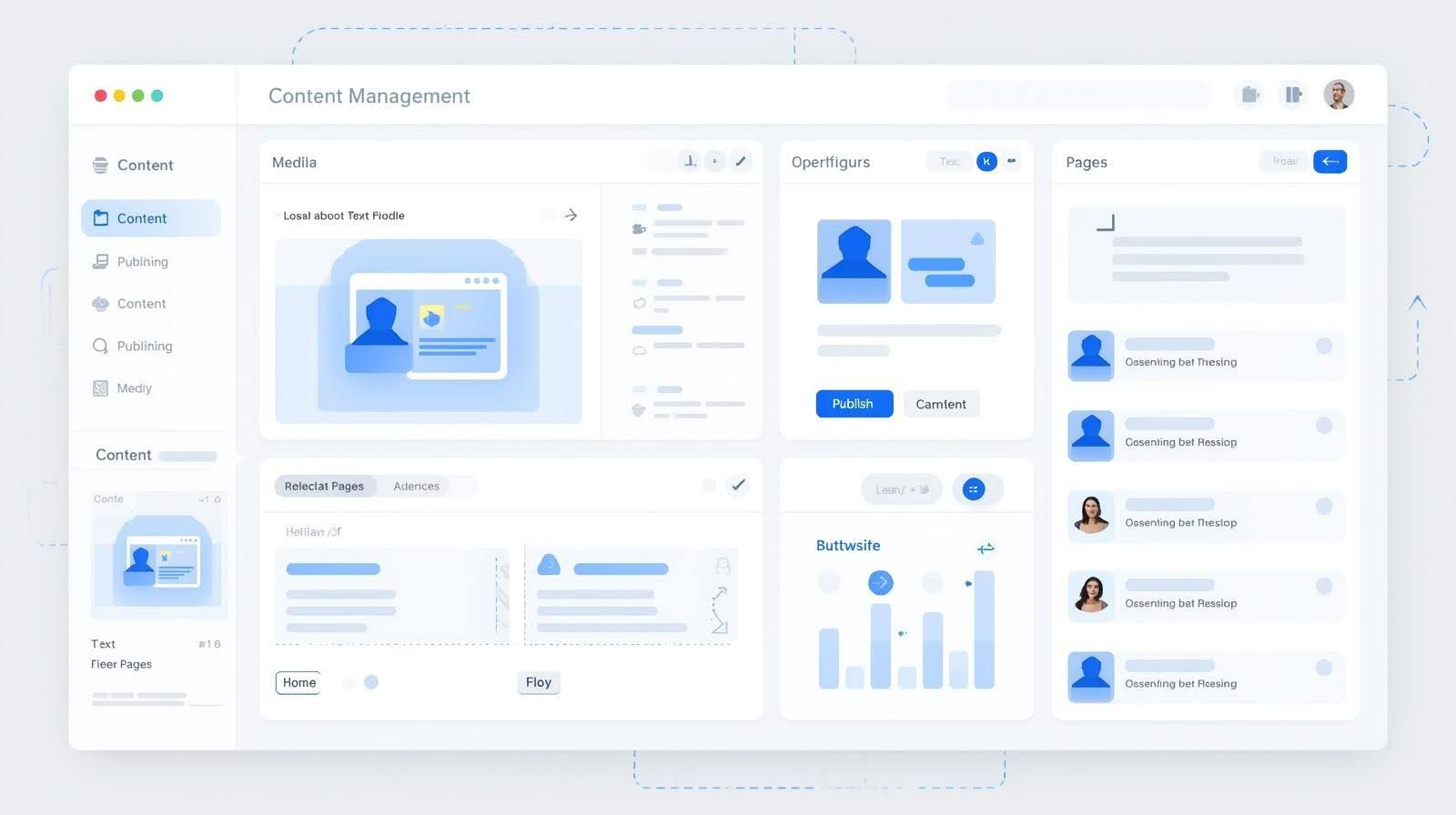
Development services of CMS are aimed at the development of platforms that simplify and more effectively manage the content. Businesses can develop their own solutions, which are based on their requirements as opposed to using generic systems.
Essentially, a CMS enables one to handle digital data without coding. The teams are able to update pages, write blogs, and upload media in addition to making changes. It comes in handy, particularly to firms that have regular publishers.
Nevertheless, contemporary businesses frequently require something beyond a bare minimum. They need a system that will support several users, integrate with others, and be able to support various forms of content. This is the reason why a number of organizations invest in custom CMS development.
Why content management systems matter
The content is one of the major factors that affect businesses in their interaction with the audience. Be it a website, a blog, or a product page, content influences the perception of customers of a brand.
The absence of the right tools makes content management a lengthy and inaccurate process. Teams can find it challenging to use obsolete information, mixed messages, or take time to release updates.
Content management systems come in at this point. They bring all the content to a central point and enable teams to handle it effectively. Non-technical users are in a position to do most tasks without the help of the developers since the developers need not be involved whenever making minor updates.
This saves time, as well as enhancing workflow among groups.
The need for custom CMS solutions
Ready-made CMS systems are effective with most companies initially. But with increased needs, restrictions begin to emerge. Some features may not be available in the companies, or the companies may find it challenging to connect the CMS to the other systems.
A traditional CMS overcomes these problems by providing flexibility. The developers can build the system according to the way the business is run. These involve custom workflows, user roles, content structures, and integrations.
As an illustration, an eCommerce company may require a CMS that integrates with stock and payment systems. A publishing firm might need sophisticated publishing processes and content scheduling applications.
Bespoke solutions enable businesses to create what is required of them rather than aligning their processes with a tool.
Enterprise CMS solutions for large organizations

The content requirements of businesses are more complicated as they grow in scale. The big organizations tend to have many websites, languages, and content groups. Such situations require a basic CMS.
Enterprise CMS solutions come in at this point.
Enterprise systems are usually made to support bulk content and multiple users in the departments. Most of them have sophisticated functions like workflow automation, content approval workflow, versioning, and analytics.
These systems also enable connection with other tools used by the enterprise, including marketing tools, customer relationship management tools, and data analysis tools.
Organizations are able to deal with content at scale without losing their control and consistency with the appropriate enterprise CMS.
Improving workflow and team collaboration
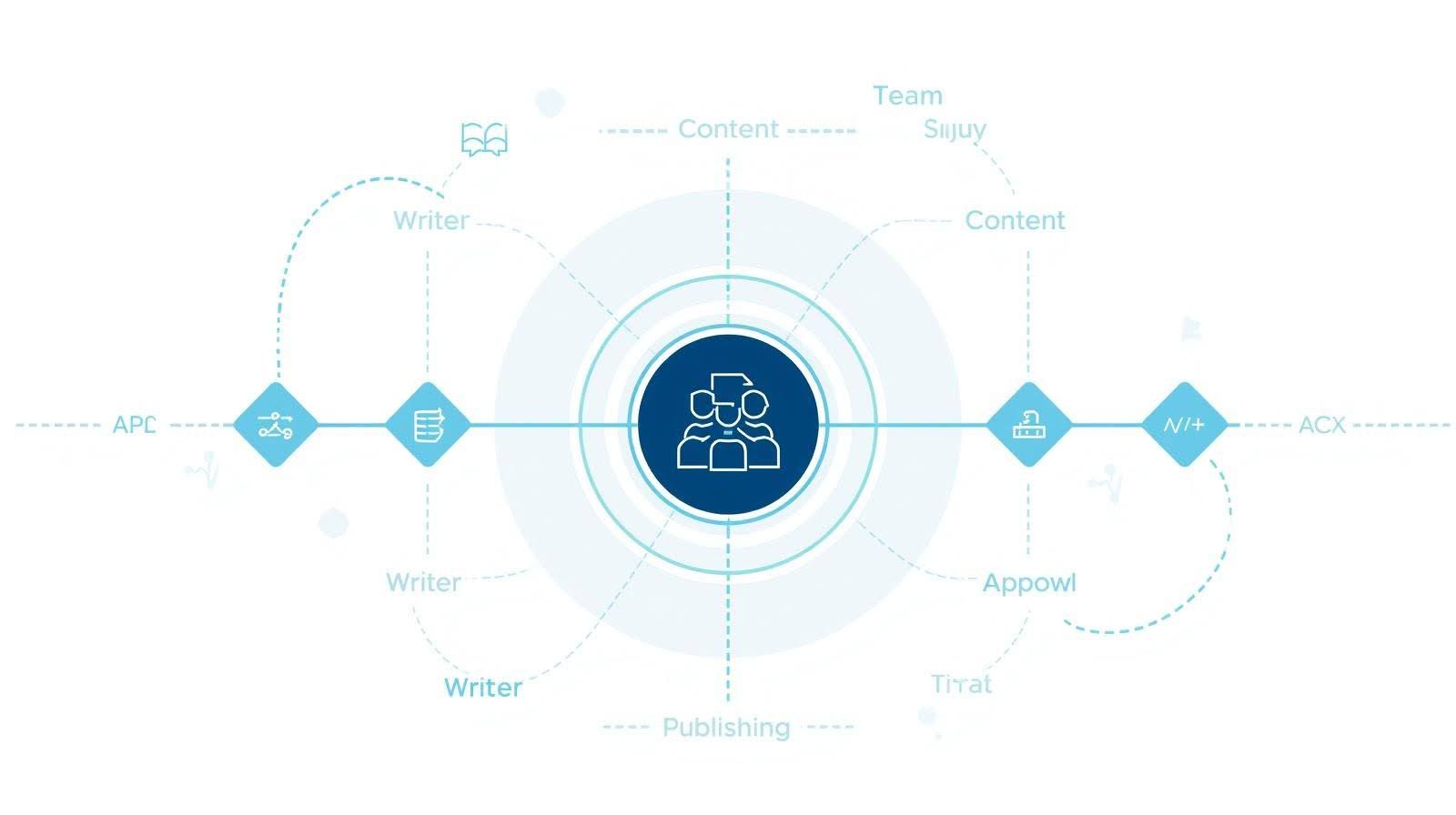
Improved workflow is one of the greatest advantages of CMS development services. An effective CMS enables the teams to work together.
As an example, content creators are able to write and edit articles, and the editors revise and approve them before being published. Designers are capable of managing media assets under one roof, whereas the marketing teams can pre-plan content.
Such an organized process streamlines the delivery and makes sure that all content is taken through the proper channel before it can be published.
It also assists in keeping the quality and consistency of all the content.
Integration and scalability
There are various digital tools that are used by modern businesses. A CMS is not supposed to be in isolation. Rather, it ought to be networked with other systems to form a networked digital environment.
CMS development services may have an integration with tools like analytics platforms, marketing automation systems, and eCommerce solutions. This enables companies to monitor performance, automatic campaigns, and customer data in a better manner.
Another critical consideration is scalability. The system must be capable of supporting extra demand as the content increases without slacking. Scalable CMS makes sure that companies can increase their content strategy without any technical constraints.
Choosing the right CMS approach
A highly complex CMS is not always necessary for any business. The correct course of action is based on the size of the organization, the nature of the content being handled, and the future objectives.
The smaller companies can use simpler systems with minimal features. Conversely, bigger organizations usually need tailor-made or enterprise-level solutions to be able to run their operations efficiently.
Collaboration with proven developers may successfully assist companies in selecting the appropriate strategy and creating a system that will address the immediate and future demands.
Final thoughts
Content management has stopped being about page publishing. It encompasses efficient information management, consistency, and a smooth experience.
CMS development services assist businesses in developing systems that can support these objectives. Traditionally, custom CMS platforms or highly-developed enterprise CMS are both able to develop tools that suit their workflows and able to scale with their growth.
To business organizations that aim at remaining organized, enhancing collaboration, and handling content without having to jump through hoops on a technical front, a suitable CMS solution will make a difference to be felt.

Adnan Ghaffar is the visionary CEO of CodeAutomation.ai, a platform dedicated to transforming how businesses build software through cutting-edge automation. With over a decade of experience in software development, QA automation, and team leadership, Adnan has built a reputation for delivering scalable, intelligent, and high-performance solutions.
Under his leadership, CodeAutomation.ai has grown into a trusted name in AI-driven development, empowering startups and enterprises alike to streamline workflows, accelerate time-to-market, and maintain top-tier product quality. Adnan is passionate about innovation, process improvement, and building products that truly solve real-world problems.



 Office 254, 1755 Park St Suite 200, Naperville, IL 60563, United States
 201 N AZALEA LANE, Orleans, Ontario CA K4A4R5